wetenschap • tech • gezondheid • geld

Historicus Yuval Noah Harari (‘Sapiens’ en ‘Homo Deus’) heeft een duit in de zak over klimaatverandering. Als de geborneerde interviewer hem vraagt over de ‘aanstaande catastrofes,’ zegt hij: ‘Als ik afga op de beste rapporten die ik gelezen heb, als we nu twee procent van het wereldwijde BBP investeren in het ontwikkelen van milieu-vriendelijke technologie en milieu-vriendelijke infrastructuur, dan zou dat voldoende zijn om catastrofale klimaatverandering te voorkomen. Het mooie van 2% is dat het wel een heleboel geld is, maar wel haalbaar. Als het 20% was dan zou ik zeggen ‘vergeet het maar, te laat.’ Maar 2%? Politici doen niets anders dan het heen en weer schuiven van 2% van de begroting, van daar naar hier en terug. Dat kunnen we. We moeten af van dat apocalytische denken dat het te laat is, en dat de wereld ophoudt te bestaan, en ons richten op iets praktisch: 2% van de begroting. That’s it.’

Krijg je daarmee mensen in beweging?

‘Dat is het mooie van twee procent. Het is niet erg indrukwekkend, maar dat is precies zo goed. Het geeft hoop. Het is niet zo dat we de hele economie ondersteboven moeten gooien en in grotten moeten gaan leven. We hoeven alleen maar 2% te verschuiven. Meer niet. Ik denk dat dat een krachtige boodschap is.’


Vrouw zijn
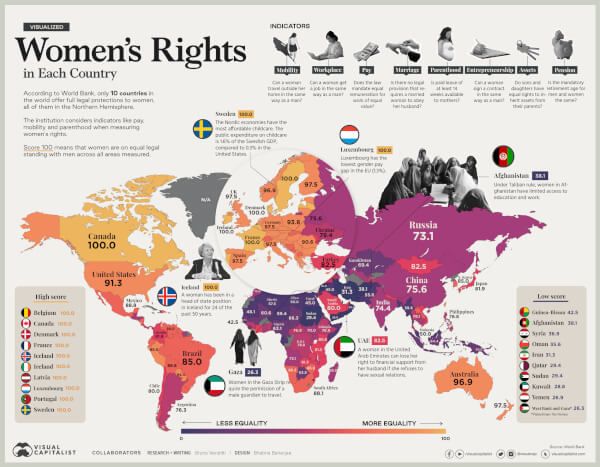
‘Vrouwenrechten.’ (Dat woord alleen al … Ooit een grafiek gezien die is gewijd aan mannenrechten? Moeten we niet zeggen: waar worden mannen en vrouwen gelijk behandeld? Enfin.) Bestudeer dit overzicht van de Wereldbank. Alles hangt natuurlijk af van de definities. Wat is het criterium? De Wereldbank: ‘Waar krijgen vrouwen volledige bescherming voor de wet.’ (Dat is toch in zichzelf alweer een testimonium paupertatis?) Hoe meet je dat? ‘Gelijke honorering, rechten, en bewegingsvrijheid.’ Slechts tien landen scoren 100%, waaronder België; niet Nederland en Duitsland. De mensheid heeft nog een lange weg te gaan.


U wordt gevolgd (2)

Gisteren vroeg ik: kan het zijn dat Uber (en andere bedrijven) kijken naar het model telefoon waarmee ik een taxi boek, om te kijken hoe draagkrachtig ik ben? Kranten hebben al gespeculeerd dat ze dat vast wel doen, maar ik kon geen zekerheid vinden. Lezer R.C., die liever anoniem blijft, schrijft:

‘Ik zit in de software kant van de vakantiereiswereld. En ja: prijzen worden afgestemd op het device dat je gebruikt. Dat ‘weten’ “wij”, en met ons alle aanbieders van online producten en diensten. Prijzen worden er inderdaad op afgestemd. Ook locatie speelt een rol. Zo zul je bij Booking een lagere accommodatie prijs aangeboden krijgen als je mobiel boekt. Je wordt geacht jonger te zijn (geen laptop meer), en flexibeler in je keuzes. Dus beter op zoek naar prijzen en ook prijsgevoeliger. Sterker nog: Booking biedt hotels de mogelijkheid om hierop in te spelen, en vraagt ze hun pricing erop af te stemmen.Je kan het omdraaien: er is vrijwel niets dat een Uber als aanbieder niet van jouw weet. Ik twijfel er niet aan dat ze zullen bijhouden of jij bijvoorbeeld in dure of minder dure restaurants eet, wat het prijssegment is van de kleding die je koopt etc. Het is de functie van cookies, die door velen achteloos worden geaccepteerd. Je zou die cookie statements eens goed moeten lezen in al hun details, om te begrijpen wat er gebeurt.

Door acceptatie heb je dus ingestemd. Jij hebt in feite pro-actief ingestemd met het verzamelen van al die gegevens. Er is helemaal niets geheims of verborgens aan. Het wordt gewoon niet goed gelezen of te achteloos geaccepteerd. Er valt door dergelijke bedrijven niets ‘openbaar’ te maken, omdat ze dat al deden toen je de cookie accepteerde; daar kon je het lezen…’

Nou, daar valt weinig aan toe te voegen. Lezer B. Verdam is in de kleine lettertjes gedoken:

‘Een snelle blik op de privacyvoorwaarden van Uber leert mij dat gepersonaliseerd pricing op basis van het telefoonmodel in ieder geval prima facie juridisch gelegitimeerd is. Zie Uber’s privacy policy: https://www.uber.com/legal/en/document/?name=privacy-notice&country=netherlands&lang=en

Device data: We may collect data about the devices used to access our services, including the hardware models, device IP address or other unique device identifiers, operating systems and versions, software, preferred languages, advertising identifiers, device motion data, and mobile network data.” Zie “how we use data”:

“9. Automated decision-making:  (…) We use personal data to make automated decisions relating to use of our services. This includes: (…) enabling dynamic pricing, in which the price of a ride, or the delivery fee for Uber Eats orders, is determined based on constantly varying factors such as the estimated time and distance, the predicted route, estimated traffic, and the number of riders and drivers using Uber at a given moment.”(Vetgedrukt door mij)

En een paar minuten later schrijft hij:

‘En ook interessant (onder IIb, 9, how we use data):  ‘Using driver data (such as location, rating and gender) and rider data (such as rating, origin and destination) to help avoid pairings of users that may result in increased risk of conflict.’

En nog wat leerzame ervaringen van anderen:

‘Bij vliegtickets (Transavia) en bij Booking.com:  Als je een aantal keren naar dezelfde accomodatie/vliegticket kijkt dan gaat opeens de prijs omhoog – waarschijnlijk om je te pushen om dan maar snel te boeken. Als je dan vervolgens je VPN aanzet, of op een andere manier via een ander IP adres bij ze binnen komt en naar exact hetzelfde product gaat, dan is de prijs weer zoals die origineel was en boek je dus gewoon weer voordelig.’ (F. Keunen)

‘Ik was een keer in de VS en kreeg van Uber een hoge prijs. Heb toen de Lyft app gedownload en prompt halveerde de Uber prijs!’ (M. Wesseling)


Drank
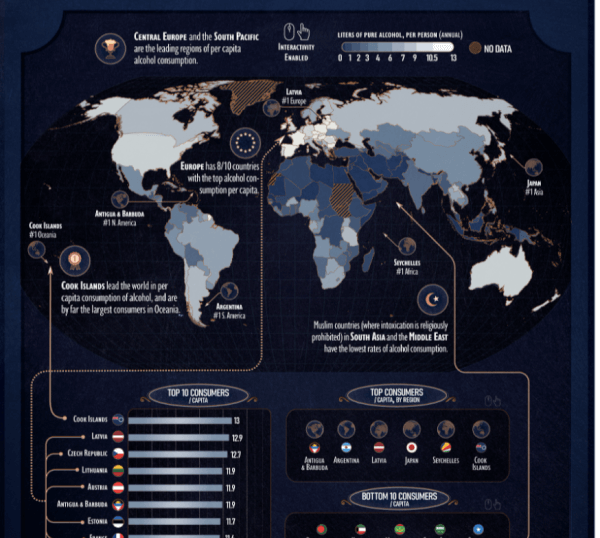
Welk land heeft de hoogste alcoholconsumptie? Grafieken op basis van de meest recente cijfers in de WHO. Opvallend: Frankrijk en Spanje drinken meer dan Rusland; in de top-10 wereldwijd staan 8 Europese landen.


Hebt u dat ook?

Een Bicker-lezer die zichzelf op de allernieuwste iPhone had getrakteerd, de 13, zag tot zijn verbazing dat een ritje Amsterdam-Schiphol plotseling 43 euro kostte op Uber. Terwijl dat voorheen toch niet meer was dan 35 euro. Zou Uber dan kijken met wat voor telefoon je een bestelling plaatst ……?

Beetje rondneuzen leert dat dit vermoeden al lang bestaat. Al in 2018 schreef The Guardian: There are other clues that Uber et al might be examining your personal data in order to toggle their prices based on your propensity to pay more at a particular moment. In 2016, for example, a behavioral scientist at Uber divulged that the company knew that people were more willing to pay a higher fare when their phone batteries were low. While they said they “absolutely don’t use that” information, one has to wonder why they have a behavioural economist on staff in the first place, if it isn’t to manipulate prices based on people’s behavior.

What other data points might Uber be looking at to gauge your price sensitivity? Obvious factors include the sort of credit card you use, where you live, the make of phone you’re using, and your ride history. But, really, we have no idea how much information the likes of Uber know about us and how they are using this data; their privacy policies are incredibly broad. (vet gedrukt door mij toegevoegd, DB)

En kennelijk hoeven ze dus niet openbaar te maken wat ze precies allemaal weten, door die ‘privacy’ policy.

Hebt u soortgelijke ervaringen?


Chinees vertalen
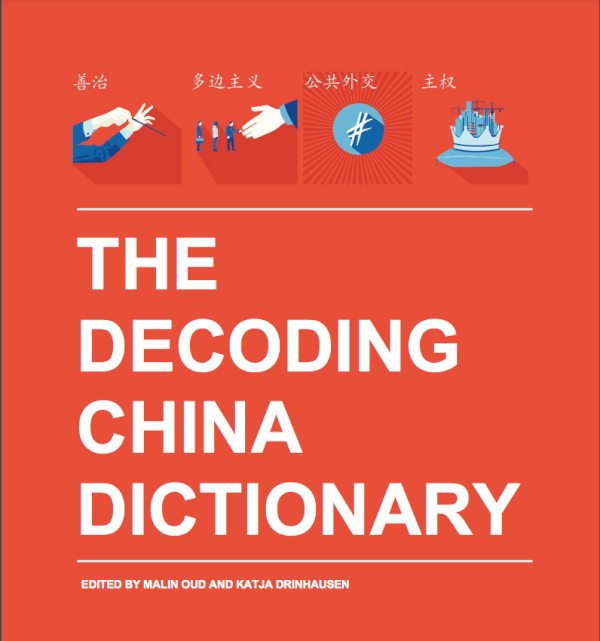
Lezer Paul Rodts tipt een nieuw handboek: ‘The Decoding China Dictionary.’ Mag ik dat vertalen als: ‘China ontcijferen’? Geschreven door vijf journalisten en academici met tientallen jaren ervaring in China. De bedoeling is duidelijk: duidelijk maken wat de Chinese ‘Newspeak’ echt bedoelt. Als de Chinese overheid bijvoorbeeld spreekt over ‘democratie,’ wat bedoelt ze dan? Democratie binnen de Communistische Partij. De CP luistert naar iedereen, ook zelfs mensen buiten de Partij, en beslist dan wat het beste is. Liberale democratie, zoiets als wat wij hebben, is al in 2013 gedefinieerd als ‘een bedreiging voor de stabiliteit het regime.’

Zo ‘vertaalt’ het boek 14 termen waaronder Cultuur, Soevereiniteit, Mensenrechten en de Rechtsstaat.


Aandachtspunt

Waar moet je op letten als je het nieuws uit de COP26 klimaattop volgt? Tijdschrift Nature heeft een gedegen artikel – met verhelderende, bewegende grafieken. De top is een succes, zegt Nature, als er goed gedefinieerde beleidsvoornemens komen, van overheden, om (…) alle energiecentrales te sluiten die op steenkool draaien; auto’s op fossiele brandstoffen geleidelijk van de weg te halen, en te investeren in technologie voor schone energie.

Heeft al dat vergaderen door overheden ooit iets opgeleverd? Het korte antwoord: Ja. Volgens Climate Action Tracker (CAT) hebben alle maatregelen sinds het Akkoord van Parijs in 2015 ertoe geleid dat de wereld in 2100 niet 3,6ºC warmer zal zijn dan in 1800, maar 2,9ºC. De meest recente beloftes, indien uitgevoerd, zouden die piek terugbrengen tot 2,4ºC. En als alle 131 landen die ‘net-zero’ hebben beloofd of besproken (!) daadwerkelijk hun beloftes zouden inlossen, zou de planeet niet meer dan 2ºC warmer worden.


Tja ...

… wel een mooi stadion. Het Al Thumama Stadion in Doha, ontworpen door een lokale architect. 40.000 plaatsen, zojuist geopend en klaar voor de Wereldbeker voetbal volgend jaar. Dat wel. Maar wat is er allemaal gebeurd tijdens de bouw? En het blijft een idioot idee, voetballen in de woestijn.


Mobilisatie!

George Monbiot, columnist bij The Guardian, staat op tegen defaitisme onder klimaatridders. Overheden kunnen niet snel genoeg reageren?! Er is wel eerder een samenleving in een paar maanden totaal gemobiliseerd! De VS in 1941-1944, nadat oorlog werd verklaard tegen Japan. Franklin Roosevelt voerde een federale inkomstenbelasting in – een primeur in de VS – en de belastingvoet steeg, en steeg, tot 94% in 1944. Tussen 1942 en 1945 gaf de federale overheid meer geld uit dan tussen 1789 en 1941. Fabrieken werden uit de grond gestampt die onvoorstelbare hoeveelheden vliegtuigen, schepen, tanks, munitie en machinegeweren maakten. De Amerikaan werd gebrainwashed: ‘alles recyclen!’ Kauwgumpapiertjes, elastiekjes, frituurvet. Tussen 1942 en 1945 werden geen personenauto’s gebouwd. Ook geen ijskasten of stofzuigers. Of huizen. Banden, benzine, boter, vlees,  etc gingen op de bon. De maximumsnelheid werd 50km/u om benzine te sparen. Posters verschenen: ‘Als u alleen rijdt, rijdt u met Hitler! Geef u vandaag op voor carpoolen.’ Oftewel: je wilt het wel, als je maar kunt. (of was ‘t andersom?)


'Geen kostenprobleem'

Jeffrey Sachs, al tientallen jaren een econoom van de linkerkant, om het maar onvergeeflijk te simplificeren, zegt dat de hele wereld best CO2-neutraal kan worden in 2050 – als China maar meedoet. Sachs is daarover ‘optimistisch’ want hij denkt dat China ook inziet dat er geld te verdienen valt in technologie die ‘decarbonisatie’ mogelijk maakt. Maar we moeten wel onmiddellijk ophouden met te investeren in het ontwikkelen van nieuwe gas- en oliebronnen. Hij beveelt het rapport aan van het Internationaal Energie Agentschap, getiteld ‘Net Zero by 2050’, hier)

‘We hebben enorme hoeveelheden vernieuwbare energie, en die kost al ongeveer hetzelfde als fossiele brandstoffen. Ik zie geen kostenprobleem of financieel obstakel waarom we niet net zero in 2050 kunnen bereiken – geen onmogelijke financiële barrière, geen technologische problemen die we niet kunnen oplossen. Dus daarom denk ik dat de ‘antigroei’ beweging afleidt  – die is niet gebaseerd op stevige kwantitatieve analyse. We moeten energie ‘decarboniseren’ en we hebben tegelijkertijd meer energie nodig maar dat kan best samen gaan.’

Voor wie niet over de betaalmuur van de FT heenkomt, hierachter de tekst, overgenomen van de nieuwsbrief van Sachs)

I see no financial obstacles to getting to net zero by 2050

Jeffrey D. Sachs   |   October 26, 2021   |   Interview with Martin Sandbu, Financial Times

With COP26 looming, the expert in sustainable development explains how we can have both decarbonisation and robust growth

For more than three decades, Jeffrey Sachs has had a knack for placing himself at the heart of urgent economic policy issues — all of which seem to converge in our current crisis. In the late 1980s he worked on macroeconomic stabilisation and taming runaway inflation. From 1989 on, he advised governments on their economic transition from communism to liberal democracy — a model now under threat in some of those very countries as well as challenged in the west. He subsequently moved into the rapidly growing field of the macroeconomics of health, then economic development more broadly. He served as special adviser to consecutive UN secretaries-general, first on the poverty eradication-focused Millennium Development Goals, then on their successor Sustainable Development Goals.

In this interview, Sachs speaks to Martin Sandbu, the FT’s European economics commentator — and a one-time Sachs research assistant — about the big global economic challenges. Above all, he talks about what needs to be achieved at the upcoming COP26 conference to put the world on track to contain climate change. For Sachs, the outcome should be to commit the world as a whole to net zero carbon emissions by 2050. This would require, among other things, a more ambitious commitment from China, which currently says it will reach net zero a decade later. Sachs is optimistic that China will move, because Beijing sees the opportunities in providing the technologies to make decarbonisation a reality. He also endorses the International Energy Agency’s roadmap to net zero, which entails an immediate end to investment in new oil and gas exploration. Sachs — channelling John Maynard Keynes — expresses optimism for the economic opportunities of the future. Fundamentally recasting our energy system need not come at the cost of economic wellbeing, he argues. From a technical point of view there is no reason why we cannot have both decarbonisation and economic growth. He is, however, much more downcast about politics, and particularly scathing about the US. He pins the blame for current antagonism with China squarely on Washington and the US elite. For Sachs, trying to counteract China’s rise is both hypocritical and unproductive. He instead advocates working intensively with China, and indeed globally, on problems that affect us all, while nationally overcoming the economic and social divisions that the shift to a knowledge services-based economy has brought.

Martin Sandbu: What does COP26 have to achieve?

Jeffrey Sachs: COP26 should achieve a global commitment to net zero by 2050. We have a good road map put out by the International Energy Agency. The world can do this, the world needs to do this, and this is what should come out of COP26. In addition, of course, there are important issues of climate financing, of losses and damages and other issues, yet the overarching importance of COP26 is to turn the world to a net-zero-by-2050 trajectory.

MS: That would require China to move its target up. And the IEA road map says no more oil exploration. That’s difficult for countries such as Norway, for example.

JS: China, I’m confident, will move its target up. I don’t know whether it will happen at COP26, but it should. China has the capacity to reach net zero by 2050 because it’s going to be a crucial provider of all of the key technologies needed: the zero-carbon power, the long-distance transmission, the electric vehicles, the hydrogen economy. Also, the integration of 5G or, later on, 6G, 7G into these smart zero-carbon energy systems. So, I don’t see any obstacles for China to move forward. I think more the geopolitical tensions with the US are hampering getting down to specifics on timing. When it comes to oil and gas, I think the IEA is very clear: we have more than enough. We’re going to be stranding these assets. I think the only case for oil and gas right now, if it is a case, is to convert the oil and gas into hydrogen with carbon capture and storage … but there’s going to be no case for producing oil and gas out of new reservoirs for the sake of burning oil and gas.

MS: I’d like to hear your view about the economic realism of net zero. How achievable is it, or rather how compatible is it with continued growth?

JS: First, we have vast potentials of renewable energy. Second, the costs of that renewable energy are essentially already at parity with fossil fuels, or better. I see no cost obstacles or financial obstacles to getting to net zero by 2050 — no back-breaking financial barriers, no profound technological barriers that can’t be straightened out. So in this sense I think the degrowth [movement] is kind of a distraction or a plea for the earth, but not grounded in a rigorous, quantitative assessment. We need to decarbonise energy, and we need more energy at the same time, but there’s no incompatibility in any way of having both of those.

MS: And that means we can continue to have growth.

JS: Yes. I think what’s important, what I would like to emphasise, is that growth as measured by GDP per capita is not an especially strong target for humanity. So if we talk about improvements of material wellbeing in a more accurate way, we can certainly have that. If we talk about ending poverty and deprivation in poor countries, or tending to the needs of poor people in rich countries, we can certainly do that. This is not the thermodynamic limit of scarcity on a finite planet as is sometimes said in loose talk.

MS: I think a lot about the Montreal protocol on CFCs [the 1987 treaty to phase out chlorofluorocarbons and other substances damaging the ozone layer] and observe that we still have spray cans, we still have refrigerators, and so on. It may well turn out that net zero carbon will look very similar — ie our lives will be pretty similar to now, but we will have found solutions under the hood, as it were, to make them carbon free. In your view, how will the way we live our lives and the way we organise our societies have changed by 2050, if we succeed?

JS: I think it will still be true that we will turn on a light switch, there will be electricity and there will be light. We will be able to fly, ride in trains, ride in vehicles. But I would add one important point, that even aside from the green transformation, the digital transformation is going to change our lives enormously, as it has in the last two years, certainly in the next 28 years. I think we have the chance to live much better in the future. I think we will be much less automobile-centred than we were in the 20th century … I believe that we will have car sharing rather than car ownership, for example, and we will have a lot more ecommerce, which will change tremendously the logistics of our city life. We will have much more flexible work and shorter work hours, I believe, because of what we’ve already experienced for a lot of the economy in the last two years. But I don’t think that it’s going to be the imperative of green that will be the main reason for the behavioural changes. I think it will be mainly the increasing technological options that are available for more flexible lives, more life of leisure, more continued education, more cultural enrichment and a more care-oriented economy. The make-or-break issues facing the COP26 climate summit

MS: There are the echoes here of Keynes’ ‘Economic Possibilities for our Grandchildren’.

JS: It’s one of my favourite essays. I subtitled one of my books with that and I continue to read it for pleasure and insight.

MS: Let’s move on to the hopefully soon post-pandemic — or at least somewhat less dominated by the pandemic — world. Everyone now wants to build back better. But for you, what does building back better mean? Concretely.

JS: Building back better concretely means achieving the Sustainable Development Goals and achieving the target of 1.5 C [of warming] in the Paris agreement. Our world doesn’t agree on a lot of things, and yet all 193 UN member states agreed on sustainable development as the organising principle for international co-operation and economic strategy within countries. Of course, that’s a declaration, it’s not a realisation by itself, but the fact is it is globally agreed. It is my daily life experience with governments all over the world that they’re taking these goals seriously.

MS: But in the short run that means a huge scale-up in public investment, and yet you have a debate in the US, in much of Europe, where you get this strong push for normalising both fiscal and monetary policy because of a fear of inflation.

JS: I think we’re seeing a government move to the left on the conventional spectrum. We have it in the Norway elections recently, we have it in the German elections. Covid has reminded people we need strong and effective government. We need public services. We need public investment. I would say the European Commission is carrying out a social democratic programme, not in name … but in spirit. This is the European Green Deal, in my view. And I think that this is also reflected in Joe Biden’s election and his package that is now under heated debate. The United States is quite a right-wing and libertarian-dominated political system. It has been for the last 40 years. It’s trying to break out of this lock that the elites have had on our tax system. The debate in the United States right now over the Biden package is entirely a back room debate about rich people not wanting to be taxed. This is nothing more than this.

MS: So warnings about inflation are simply vicarious arguments in your view?

JS: Good economics recognises that we’re not really talking about short-term business cycle macro on these issues, we’re talking about allocating a greater part of national income away from consumption of the rich or investments by the rich, towards broader common goods. And to some extent simply reallocating investments that we would spend on oil and gas and coal to wind and solar and other green technologies. I believe that we should raise taxes to do it, primarily in the US context, even though there are multiple cases for some deficit financing as well, both intergenerational and simply fiscal accounting. The interest rates are so low that many of these investments will repay themselves in future public tariffs collected on the infrastructure.

MS: Let’s talk about the provision of global public goods and global co-operation, or the lack thereof. And the US-China relationship specifically. Is the global economy really at risk of fragmenting, do you think?

JS: Our problem isn’t really a trade war; our problem is war more generally and the risks of that. The US hardening towards China started after China’s Made-In-China 2025 programme, in which China announced that it would aim for cutting-edge excellence in major 21st century technologies. I watched the US elites around that. The basic attitude, if I could paraphrase, was: “how dare they do that? That’s what we do, not what they do. They’re a workshop, we’re the technology leader.” I’m not in favour of US primacy. I’m in favour of multilateralism. I’m in favour of a multipolar world operating under the UN Charter. And my interpretation, which is not the popular one in Washington to be sure, is that the US has stoked this controversy in the intended service of US primacy. It is extremely dangerous and we’re not only missing enormously important opportunities for co-operation but also possibly falling into flash points that could accidentally lead to disaster. And Taiwan is one of those potential flash points. I’m old enough to not only know of but to remember the Cuban Missile Crisis, and that was an accident, in a way, that almost ended the world. And I know American elites play with fire too much, and I don’t like it and that’s what concerns me tremendously about this period. It won’t succeed, it’s naive, because China will prove, as the Soviet Union did in the late 1940s, it can catch up. There are a lot of great scientists, there’s a lot of technological capacity. And rather than aiming for a cold war we should be aiming for co-operative understanding. And an appreciation that a prosperous China in an international system is a good thing for the world.

MS: I think Europe has always been OK with the prospect of China growing rich. But recently even hardcore free trading member states of the EU have reluctantly politicised their trade policy because of what they see to be a serious concern about some Chinese actions — trying to split EU member states through the Belt and Road Initiative and the 17+1 [initiative] in eastern Europe and so on. There are strategic issues about dependence on semiconductors and 5G, and there’s human rights in Xinjiang.

JS: I don’t like the 17+1 at all, but what I would like is a far more active engagement of the 27 [EU member states] with China. The US was hostile to the Belt and Road from the first step. I tend to be a fan of it because I think that building out infrastructure in Eurasia is a good thing. And now that China is increasingly greening the Belt and Road it’s an even better thing.

MS: But it would require the EU to put up at least as much money as China is.

JS: Well, I think that Europe and China as a whole should be dealing with each other on an intensive basis. One of the reasons why Europe is reacting now with more politics in trade is that as Europe watches this battle between the US and China, Europe is saying, well what about us? We need our own supply chains. We can’t be dependent on either [the US or China]. We need advanced semiconductors, we need 5G capability, we need an interconnected green economy. I think Europe does have a need to build some of these champions as well [such as] a stronger semiconductor capacity at the cutting edge … an EV supply chain [and a] battery supply chain for Europe …

MS: What do you say to those who say it’s simply unseemly to pursue deeper commercial engagement [with China] when we know about the forced labour in Xinjiang?

JS: Well, look, I come from a country that launched multiple wars, killed millions of people, engaged in terrible abuses in our own country. I believe that where there are abuses that have been called, they should be investigated in a UN context. And, by the way, that’s true of abuses in the United States, true of abuses in many parts of the world. I would like to multilateralise this so that it’s not part of a geopolitical game. And I have reason to believe that a lot of US charges are part of a geopolitical tactical game, not really a burning desire of the US to solve all of the human rights issues in China, because I see no such burning desire to solve the human rights challenges in the United States or places where the US has been bombing and occupying for years.

MS: An early part of your career involved helping some countries shift into a liberal democratic capitalist system. Now you’ve seen in your own country the threats to liberal democracy, and this continues to be a cultural war, an ideological war, that we see within countries. What happened?

JS: Well, I think that everywhere there are cultural and economic class divisions that are really core to these quite heated divisions in our countries. The United States is deeply riven by culture and by class. Probably the deepest division in American society is between those with a bachelor’s degree or higher and those without. The most general point is that in the last 75 years the great transformation of societies was to knowledge and digital societies. And this has left very, very deep divides. Culturally, between urban and rural. Between highly educated, less educated. Between various religious groups which often have different orientations to education. And all of this is probably the most common reason why democracy feels under threat. One more point that is mostly specific to the United States, but not entirely, is the role of money in democratic politics. America is and always has been, except for roughly the 30 years from the New Deal to the Great Society, a plutocratic society run for and by the rich. And that cleavage has been exacerbated by a series of disastrous Supreme Court rulings designed to give further power to the corporate sector and to the elite, starting back in 1978, which opened the floodgates of campaign finance. And that is also breaking our democracy apart.

MS: Is this also what’s happening in Europe? Take Hungary. You know [Viktor] Orbán. Is it really ideology just in service of personal corruption, or systemic corruption?

JS: I don’t know the answers. I know that I met Mr Orbán as a young man in 1989; we spent a wonderful day together in my back yard discussing the future of democracy in central Europe. So I remember those days and I hope that they will have some good and better effect in the future.

MS: All the policies we need for decarbonising our economies are policies that tend to hit right into the cleavages and divisions we’ve just talked about. So how do we avoid the green transition simply fuelling, or even worse falling victim to, the culture wars we already suffer from?

JS: We can’t make the green transition without also the full commitment to social inclusion and sustainable development. And it’s important that the Paris climate agreement starts out by saying that this is for climate safety within the framework of sustainable development. If societies are deeply divided, they will not be able to carry out any coherent transformations of any kind, because the challenges, the instability, the claims that are made of who’s benefiting and who’s losing will frustrate any systematic and coherent change. We see that happening throughout South America … highly unequal societies cannot function in this world adequately. It’s only countries that are committed to social inclusion that can do the kinds of things that are needed for broader common good.


Abonneer De Bicker

Vul hieronder uw e-mailadres in om u in te schrijven voor de nieuwsbrief
jamie@example.com
Abonneer